Phototherapy & Exchange Transfusion in Dehradun
Meher Hospital in Dehradun Uttarakhand
Trust our neonatal care experts for specialized treatments such as phototherapy and exchange transfusion for newborns with jaundice or other conditions. Our dedicated team utilizes the latest techniques and equipment to ensure optimal outcomes for your little one’s health and well-being.
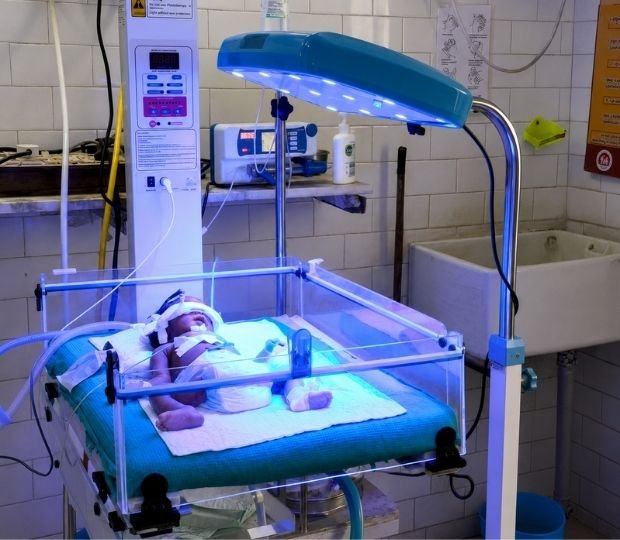
Meher Hospital helps newborns with phototherapy and exchange transfusion which shows dedication towards the childcare. Phototherapy is the treatment used to cure newborns from jaundice resulting from high blood pressure levels. Newborns are kept under the blue light which creates a calm atmosphere, which results in the breakdown of jaundice. We are having a team of experts who will work with dedication to guarantee the newborn well-being. On the other hand, exchange transfusion shows our dedication to saving young lives. In this complicated procedure, a part of the baby’s blood is substituted with the donor’s blood. This method is done to use to treat the conditions of severe jaundice. We ensure that surgery is done without any harm and with full accuracy which results in maximum outcomes. We ensure to provide newborns with healthy well-being.
What is Neonatal Jaundice?
Jaundice in newborns occurs when bilirubin — a yellow pigment produced during the breakdown of red blood cells — accumulates in the blood faster than the liver can process it. It appears as a yellowing of the skin and whites of the eyes. Most cases are physiological (normal) and resolve within one to two weeks, but some require medical intervention.
Risk Factors for Significant Neonatal Jaundice
Prematurity: The liver of a premature baby is less mature and may struggle to process bilirubin efficiently.
Blood Group Incompatibility: ABO or Rh incompatibility between mother and baby can accelerate red blood cell breakdown.
Infection: Sepsis or other infections in the newborn can worsen jaundice.
Bruising at Birth: Birth trauma causing bruising leads to additional bilirubin from the breakdown of the trapped blood.
Breastfeeding Difficulties: Insufficient milk intake in the first days of life can exacerbate physiological jaundice.
Phototherapy
Single Phototherapy: One phototherapy unit, typically used for mild to moderate jaundice.
Double / Intensive Phototherapy: Two or more phototherapy units used simultaneously when bilirubin levels are rising rapidly or approaching the threshold for exchange transfusion.
Monitoring During Phototherapy: Bilirubin levels are checked regularly (often every 4–12 hours) using blood tests. Eyes are shielded during treatment. Temperature and hydration are monitored closely.
Duration: Most babies respond within 24 to 48 hours, though some may require longer treatment depending on the underlying cause.
Exchange Transfusion
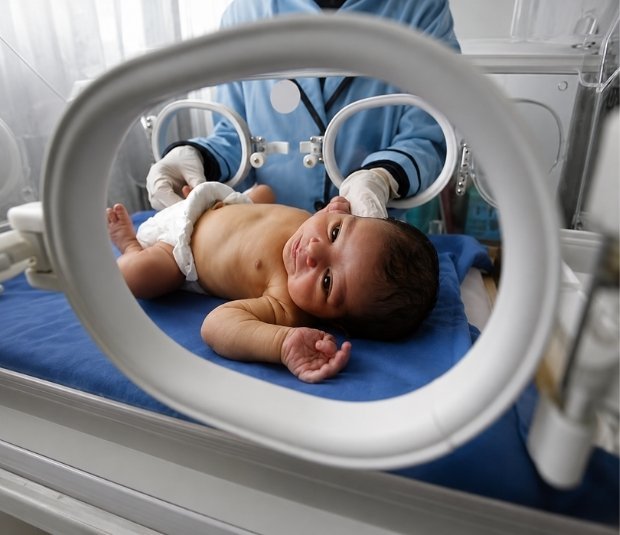
When is it Required? Exchange transfusion is reserved for cases of very high bilirubin, haemolytic disease of the newborn, or failure of intensive phototherapy.
How is it Performed? The procedure is carried out in the NICU by a neonatologist through an umbilical catheter. It is conducted slowly and carefully with continuous monitoring of the baby’s vital signs throughout.
Post-Procedure Care: The baby remains under close observation following the procedure, with bilirubin levels rechecked and phototherapy resumed as needed.
Why Choose Meher Hospital for Neonatal Jaundice Treatment?
Expert Neonatology Team: Led by Dr. Hans Vaish M.D., an experienced paediatrician and neonatologist, the neonatal team is skilled in identifying and managing all levels of neonatal jaundice.
Well-Equipped NICU: The neonatal intensive care unit is equipped with modern phototherapy units, monitoring equipment, and the facilities required for exchange transfusion.
Parental Involvement: Parents are kept fully informed throughout the process and are encouraged to continue skin-to-skin contact and breastfeeding where safe to do so.
24-Hour Neonatal Cover: The neonatal team is available at all hours, ensuring rapid response to newborns who develop or worsen jaundice overnight or at weekends.
WE'D LOVE TO HEAR FROM YOU